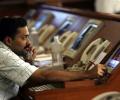
Indian benchmark stock indices, Sensex and Nifty, closed lower due to profit-taking, a spike in wholesale price-based inflation, and firm crude oil prices, despite some support from easing intraday crude oil prices and rupee appreciation.

Indian equity benchmark indices Sensex and Nifty rebounded sharply in early trade, with the Sensex jumping over 530 points, tracking a broad-based rally in Asian markets after four consecutive days of decline.

Indian benchmark indices Sensex and Nifty closed higher for the second consecutive day, primarily driven by robust buying in IT stocks following strong quarterly results and positive global trends. Tech Mahindra notably surged over 8% after reporting a significant jump in net profit.

Investors are set to monitor quarterly earnings, crude oil prices, the Jio Platforms initial public offering, and foreign investor activity in the upcoming holiday-shortened week, according to market analysts.

Eight BJP and two Samajwadi Party candidates are set to be elected unopposed to the Rajya Sabha from Uttar Pradesh after the nomination papers of two independent candidates were rejected. This ensures all 10 available seats will be filled without a contest, with the BJP fielding new faces ahead of the 2027 assembly polls.

'When the women of India become unstoppable, India becomes unstoppable.'

The portfolio could be split between listed and unlisted investments, or structured along sectoral lines.

Reliance Industries Ltd reported a 22 per cent year-on-year decline in consolidated net profit for the June quarter, primarily because the previous year's earnings were inflated by a one-time gain from the sale of its stake in Asian Paints.

Indian stock markets witnessed a significant rally, with the Sensex climbing 964.58 points and the Nifty reaching 24,330, driven by strong buying in blue-chip stocks, particularly in the IT and banking sectors, amidst optimism over Q1 earnings and a shift towards large-cap investments.
The benchmark BSE Sensex rebounded by 362 points, ending a four-day losing streak, driven by strong buying in metal, private banking, and oil and gas shares, while the broader NSE Nifty saw modest gains despite paring some advances in the closing session.

Eutelsat OneWeb, a satellite communications company, is awaiting approvals from the Indian central government to launch its services, as confirmed by Sunil Mittal, chairman of Bharti Enterprises, the largest shareholder in the Eutelsat group.

Lithium-ion battery recycling firm NAN Silox GreenMet Pvt Ltd has appointed Vijay Pasupathy as its Chief Executive Officer. The company is advancing plans to establish a Rs 1,400-crore critical metals recycling facility in Naidupeta, Andhra Pradesh, aiming to boost domestic capabilities in processing recovered critical metals and reduce reliance on imports.

A dozen companies, including major players like Jio Platforms and Zetwerk Manufacturing Business, are poised to launch Initial Public Offerings (IPOs) in October, continuing India's strong fundraising momentum in the primary market. These offerings span diverse sectors, reflecting sustained investor interest in businesses with robust growth prospects.

United States President Donald Trump has said that India's Reliance Industries will make an investment in a new oil refinery being opened in Texas, thanking the company and 'our partners in India' for the deal.

Indian benchmark indices, Sensex and Nifty, continued their downward trend for the fifth consecutive day, with the Sensex dropping 281 points and Nifty falling 78 points, primarily driven by surging crude oil prices and persistent geopolitical tensions in West Asia.
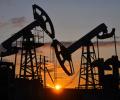
India's largest private refiner, Reliance Industries Ltd, successfully navigated a volatile energy market in the last quarter of FY26 by diversifying crude sourcing and demonstrating operational agility, particularly in response to geopolitical disruptions and cost fluctuations.
Hindustan Copper Limited CMD Anupam Misra spoke at the 85th CSIR Foundation Day, advocating for workplace safety, employee welfare, and scientific excellence. He stressed the importance of continuous learning, innovation, and bridging research with industrial applications to support Viksit Bharat 2047. CSIR-NML Director Dr. Sandip Ghosh Chowdhury also highlighted CSIR's legacy and its role in India's technological self-reliance.

Indian stock markets experienced a significant downturn, with the Sensex plunging 1,124 points to a six-month low and the Nifty closing below 22,800, driven by surging crude oil prices, escalating geopolitical uncertainties, and weak global market trends.

The Indian government has approved the sale of a 60.72 per cent stake in IDBI Bank Ltd to Canadian billionaire Prem Watsa's Fairfax Financial Holdings Ltd for approximately 52,878 crore, a move that reflects improving India-Canada ties and marks a significant turning point for the bank.

The proposal caught auto makers by surprise.

Indian benchmark indices, Sensex and Nifty, saw early gains driven by lower crude oil prices and buying in Reliance Industries, even as the Reserve Bank of India maintained its benchmark policy rate for the fourth consecutive meeting, reinforcing confidence in the domestic economy.

Indian benchmark indices, Sensex and Nifty, saw an early rebound after significant losses, driven by value buying, though elevated oil prices and anticipation of the US Federal Reserve's policy decision tempered gains. Track Sensex, Nifty on September 16.

Indian equities, particularly the Nifty 50, have significantly underperformed their Asian and global counterparts over the past year, with the index down 10.6 per cent. This lag is attributed to factors like rising global oil prices, rupee depreciation, and a lack of participation in the global chipmaker rally that boosted markets like South Korea and Taiwan.
Indian stock market indices closed on a mixed note, with the Sensex gaining 374 points driven by buying in Reliance Industries and ICICI Bank, while the Nifty remained flat. This divergence is attributed to a new Closing Auction Session (CAS) mechanism introduced by stock exchanges, impacting market liquidity and price discovery.

Indian stock markets this week will be primarily influenced by a series of corporate Q1 earnings, the evolving geopolitical situation in West Asia, and fluctuations in crude oil prices, according to market analysts.

Andhra Pradesh Chief Minister N Chandrababu Naidu announced several new initiatives for Tirumala Tirupati Devasthanams (TTD), including Aadhaar-based devotee insurance for Rs 2 lakh, the establishment of an SV Museum by TCS Trust, and the introduction of electric buses donated by Reliance Foundation and Bharat Biotech. The plans also include global expansion of Srivari temples, improved Annadanam, integrated hospital services, and significant infrastructure development in Tirupati to make it a services and wedding destination with a Net Zero concept.

The National Stock Exchange marked its stock market debut at the Bombay Stock Exchange on September 24, 2026, with a traditional gong-ringing ceremony.

Indian benchmark indices, Sensex and Nifty, traded flat in early deals due to elevated crude oil prices exceeding USD 100 per barrel and persistent geopolitical tensions, which subdued investor risk appetite.
Indian benchmark indices Sensex and Nifty experienced a significant tumble in early trade, primarily driven by heavy selling in HDFC Bank following its quarterly earnings and a sharp spike in Brent crude oil prices due to escalating tensions between the US and Iran. Track Sensex, Nifty

During his visit to Kedarnath Dham in Rudraprayag, Uttarakhand, Reliance Industries Chairman and Managing Director Mukesh Ambani donated Rs 10 crore (Rs 100 million) to the temple committee to support the development of pilgrim facilities and infrastructure.

Following astronaut Shubhanshu Shukla's historic visit to the International Space Station, a significant surge in interest for space science careers is observed among Indian students. Srimathy Kesan of Space Kidz India highlights this shift from traditional fields like engineering and medicine, while Nobel laureate Didier Queloz emphasises the crucial role of curious young scientists in shaping the future.

Indian benchmark indices Sensex and Nifty continued their upward trend for a second consecutive day, with the Sensex gaining over 800 points, driven by strong performances from heavyweights like Reliance Industries, ICICI Bank, and HDFC Bank, alongside positive cues from easing crude oil prices and robust IT sector earnings.

Civil Aviation Minister K Rammohan Naidu announced India's ambition to produce its first indigenous civilian aircraft within two years through a joint venture. He highlighted the rapid growth of the country's aviation sector, with significant aircraft orders, planned new airports, and potential for manufacturing jet engines and Sustainable Aviation Fuel, underscoring India's increasing role in global aviation.

Tata Consultancy Services (TCS) has stated that the recent suspension of eight IT firms, including itself, from a US green card programme will not impact its workforce strategy or customer engagements, citing its low number of applications and focus on local hiring.
Shares of Reliance Industries climbed nearly 3 per cent after its digital unit, Jio Platforms, filed draft papers for what could become India's largest-ever initial public offering, with the offering potentially raising around Rs 37,700 crore (USD 4 billion).

Jio Platforms Ltd, the digital and telecommunications arm of Reliance Industries, has approved filing draft papers for an initial public offering (IPO) involving a fresh issue of up to 27 crore equity shares, aiming to unlock value for shareholders and fuel its ambitious expansion into 5G, AI, and global markets.

Indian benchmark indices, Sensex and Nifty, experienced declines in early trade due to a significant surge in crude oil prices, exacerbated by escalating tensions in the West Asia. Track how Sensex, Nifty fared on July 23.

Indian benchmark indices Sensex and Nifty climbed in early trade, driven by buying in blue-chip stocks like Reliance Industries and ICICI Bank, alongside a notable cooling in crude oil prices.

Indian benchmark indices, Sensex and Nifty, closed almost unchanged due to profit-taking in blue-chip stocks, geopolitical uncertainties, fluctuating oil prices, and weak Asian market trends, despite cooling US inflation offering some support.

Reliance Industries (RIL) delivered a better-than-expected operational performance in Q1FY27, driven by a recovery in its oil-to-chemicals (O2C) business and robust gains in the telecom (Jio) segment, though its retail arm missed estimates. Analysts highlight the upcoming Jio Platforms IPO and execution in new energy and consumer businesses as key triggers for the stock's future growth.
